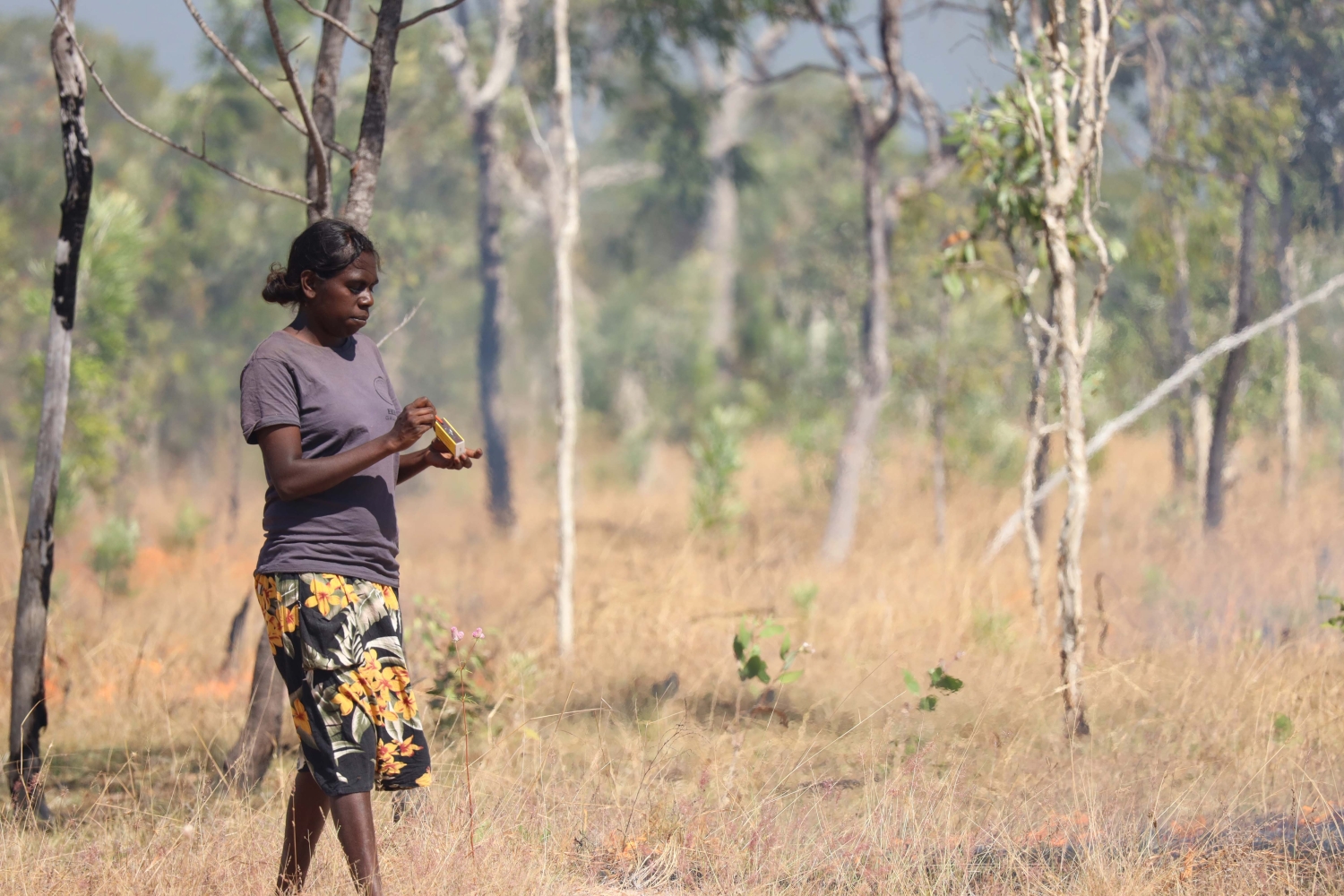
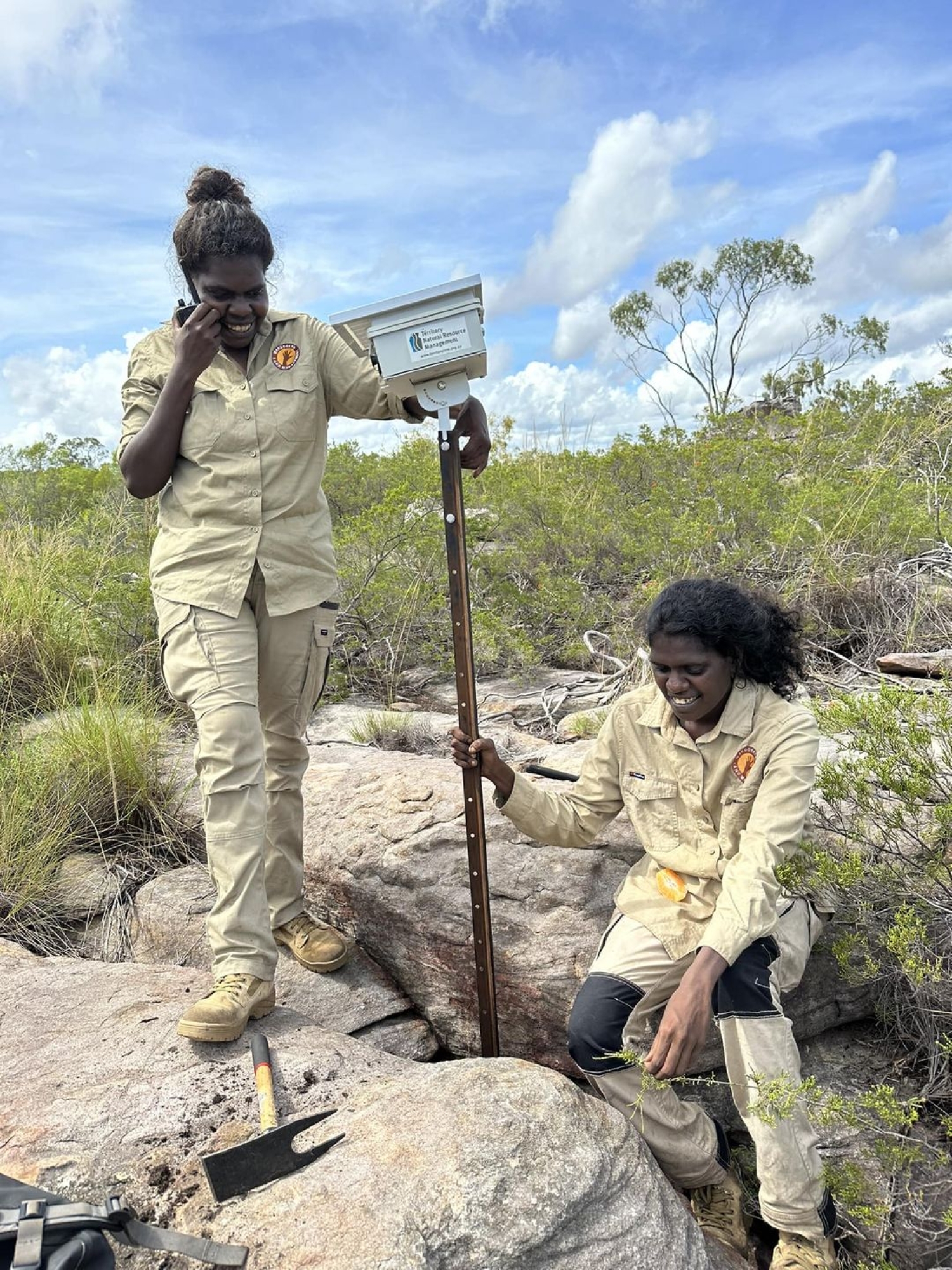
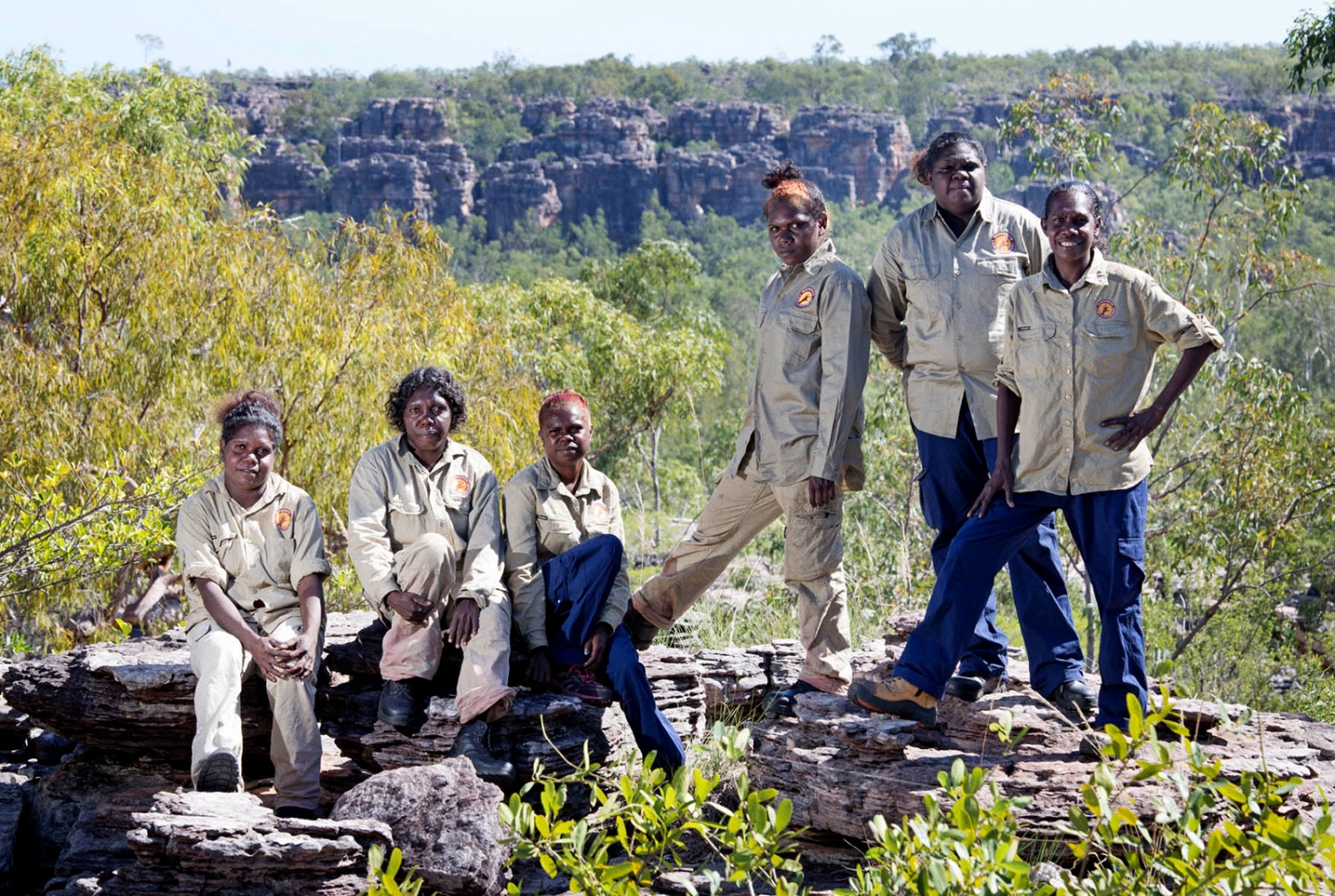
First Nations women have always played a vital role in land and sea management. Their presence is essential to balanced care for Country. Women rangers are continuing this long tradition and passing it onto the next generation in a modern setting.
25% of Australia is under some form of Indigenous land management, with the majority of this occurring through ranger programs that blend precise Indigenous ecological knowledge with cutting-edge technology. Prior to the last decade, First Nations women were sorely underrepresented within the ranger workforce. Since then, many Indigenous land management groups have designed their own women’s ranger programs that recognise and value the specific ecological knowledge that many First Nations women hold, as well as their exclusive cultural access to certain sites and stories.
Across West and Central Arnhem Land, women’s ranger programs exist both to ensure Country is managed in a balanced way, and to address the complex barriers that First Nations women living in very remote communities can encounter when it comes to accessing meaningful local employment.
This often involves the employment of a female ranger coordinator and access to dedicated fixed assets, like women’s vehicles and offices. Together, these facets create a work environment that better reflects the distinct knowledge systems and roles belonging to men and women.
In addition to this, women’s ranger programs facilitate the provision of on-Country professional development opportunities, enabling career progression in a culturally-informed setting and without compromising other important cultural and kinship responsibilities. They also guarantee that younger women and girls can identify strong female role models within their communities, and safeguard the invaluable knowledge and practices of Elders and senior rangers.